
The Next Evolution of Laser Therapy
By Joshua Cacho, DPT
Advertorial: For more than 25 years, K-Laser has been a leader in therapeutic laser technology, helping health care and veterinary professionals improve patient outcomes with innovative, high-performance systems. As part of the INDIBA Group, a global healthcare technology company with more than 40 years of innovation, K-Laser continues to advance research-driven technologies that help clinicians work more effectively and deliver better patient care.
Athletic trainers are being asked to do more than ever. From managing acute injuries and supporting return-to-play decisions to addressing chronic pain and optimizing recovery, today's athletic training professionals need tools that deliver consistent outcomes while fitting seamlessly into fast-paced clinical environments.
As laser therapy continues to gain traction across sports medicine and rehabilitation, the conversation is evolving. The most advanced systems are no longer defined by power alone. Instead, they are built around a combination of high sustained power, intelligent treatment delivery, multiple therapeutic wavelengths, and portability that allows athletic trainers to bring treatment directly to the athlete.
Research in photobiomodulation continues to demonstrate that different wavelengths interact with tissue in different ways. Some wavelengths are particularly effective for superficial tissue repair, while others target deeper musculoskeletal structures, circulation, inflammation, or pain modulation (Zein et al., 2018; Jacques, 2023). When multiple therapeutic wavelengths are combined into a single platform, clinicians gain the ability to address several physiological processes simultaneously.
This multi-wavelength approach allows athletic trainers to support tissue healing, manage pain, improve circulation, and influence recovery pathways during the same treatment session.
Studies have shown that wavelengths including 660nm, 808nm, 905nm, 980nm, and 1064nm each contribute unique biological effects that can support patient outcomes across a wide range of conditions (Fuchs et al., 2021; Hudson et al., 2013; Penberthy et al., 2021).
Equally important is how these treatments are delivered. Modern laser systems incorporate intelligent controls and condition-specific protocols designed to optimize treatment parameters while helping clinicians maintain consistency across patients. This reduces guesswork and allows athletic trainers to focus on clinical decision-making rather than manual system adjustments.
Efficiency also plays a critical role in today's athletic training environment. Whether working with an individual athlete, a rehabilitation caseload, or an entire team, clinicians benefit from technologies that can deliver effective treatments in a short amount of time while maintaining workflow efficiency.
Portability has become another important consideration. Care is no longer confined to a single treatment room. Athletic trainers often provide treatment in athletic training facilities, rehabilitation settings, training venues, sidelines, and competition environments. Portable laser platforms help ensure clinicians can deliver therapy when and where athletes need it most, supporting continuity of care throughout the recovery process.
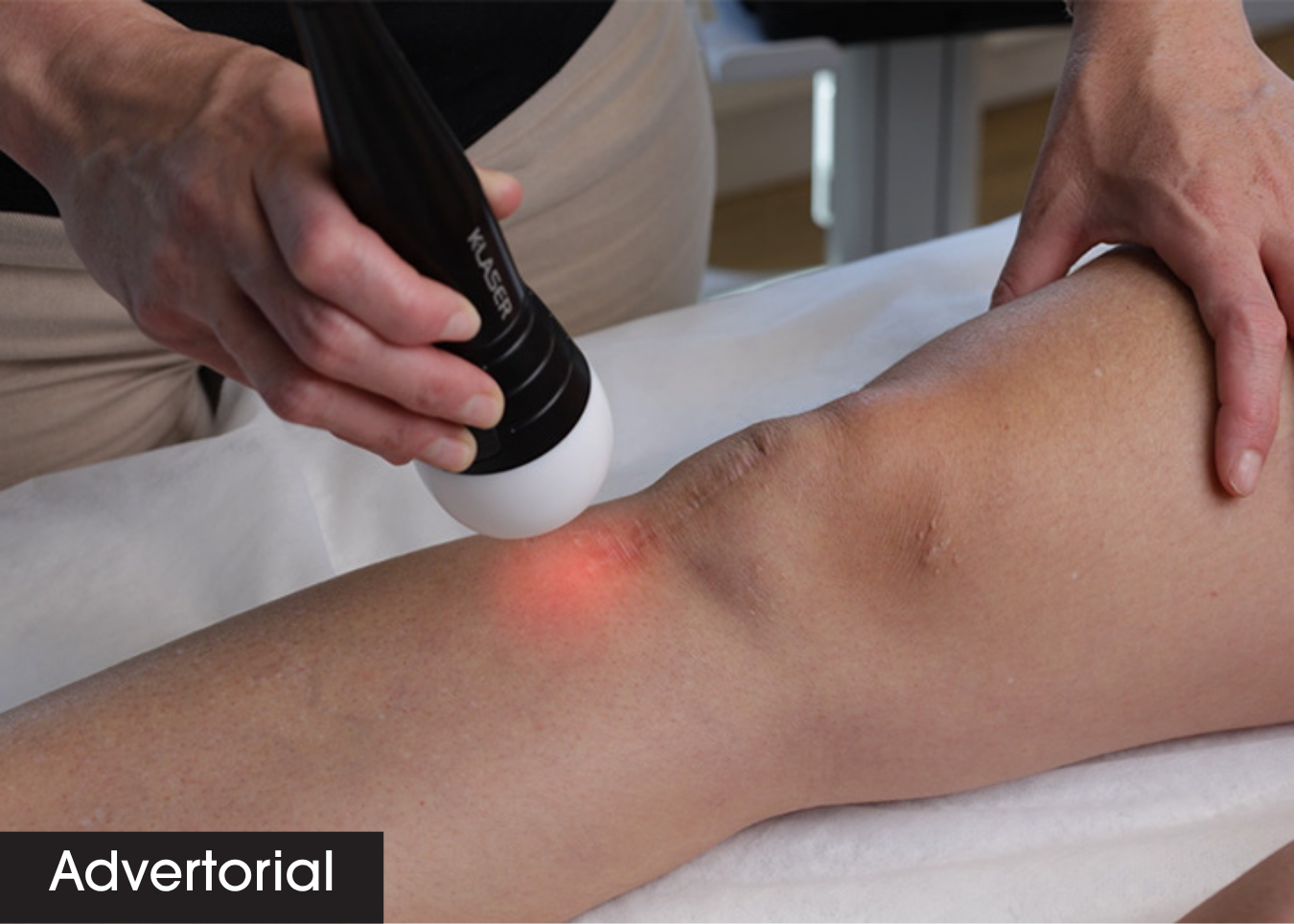
These evolving demands are helping drive the next generation of laser therapy technology. Platforms such as K-Laser GIRO combine multiple therapeutic wavelengths, intelligent treatment delivery, high sustained power, and a portable design to help clinicians deliver efficient, evidence-informed care across a broad range of applications.
As sports medicine continues to advance, successful technologies will be defined not by a single specification, but by their ability to help athletic trainers improve outcomes, streamline workflows, and support athletes throughout every stage of recovery and performance.
The future of laser therapy is not about choosing between power and precision. It is about bringing them together in a way that helps clinicians do more for the patients and athletes they serve.
References
1. Zein R, Selting W, Hamblin MR. Review of light parameters and photobiomodulation efficacy. Journal of Biomedical Optics. 2018;23(12):120901.
2. Fuchs C, et al. Photobiomodulation response from 660 nm is different and more durable than that from 980 nm. Lasers in Surgery and Medicine. 2021;53(9):1279–1293.
3. Hudson DE, et al. Penetration of laser light at 808 and 980 nm in bovine tissue samples. Photomedicine and Laser Surgery. 2013;31(4):163–168.
4. Jacques SL. Tutorial on Monte Carlo simulation of photon transport in biological tissues. Biomedical Optics Express. 2023;14(2):559–576.
5. Penberthy WT, et al. Utilization of the 1064 nm wavelength in photobiomodulation: a systematic review and meta-analysis. Journal of Lasers in Medical Sciences. 2021.
Disclaimer: NATA is not responsible for omissions, misprints, or other proofing errors and does not endorse this advertiser. The opinions expressed in this advertisement are those of the advertiser alone and do not purport to reflect the opinions or views of NATA. Statements and data have been provided by the advertiser alone and have not been authenticated.