When Volunteering Finds You
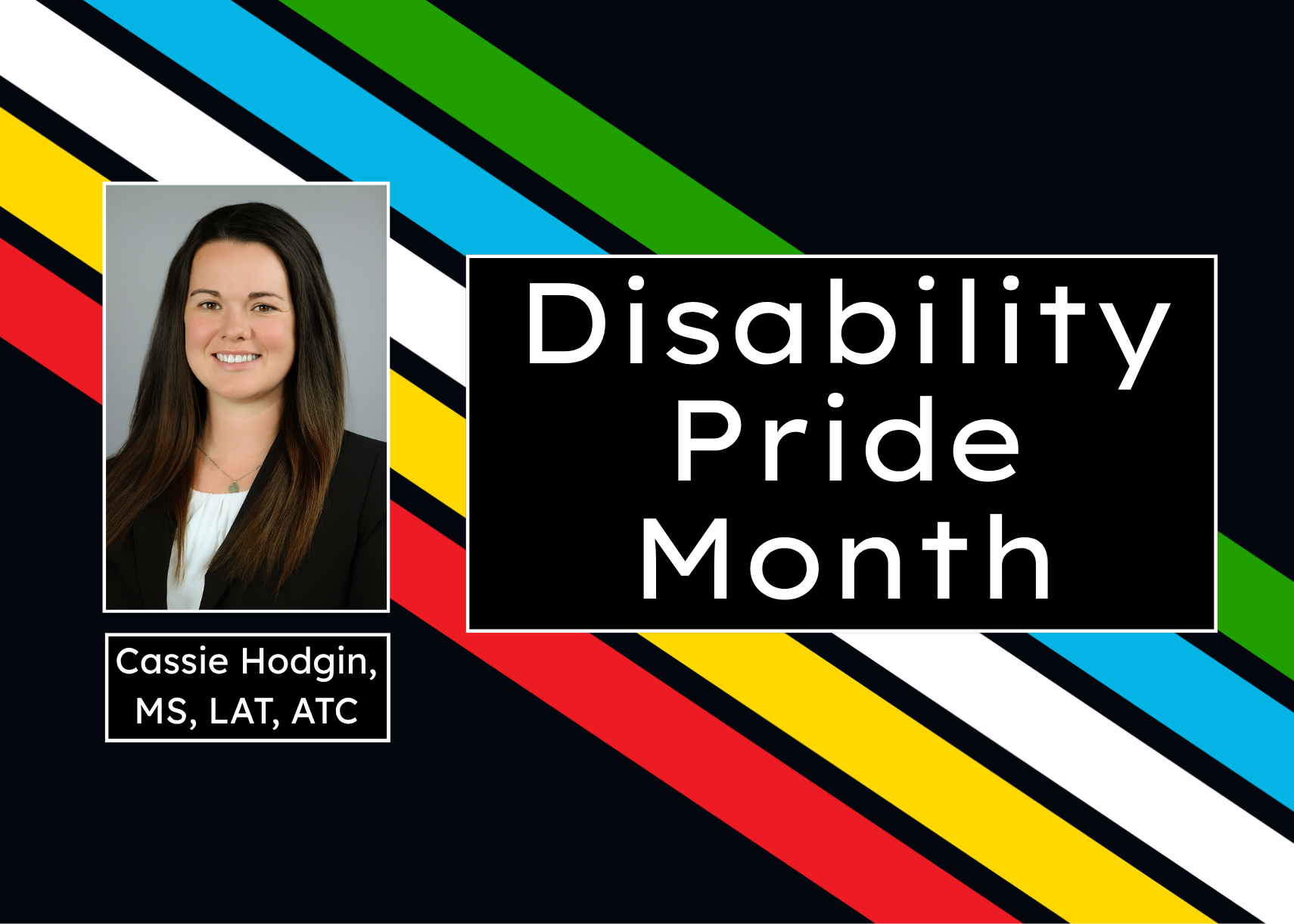
After the Americans with Disabilities Act was signed into law July 26, 1990, Disability Pride Month was created to commemorate this landmark law prohibiting discrimination against people with disabilities and ensuring accessibility in public life. In honor of Disability Pride Month, which features the theme “The World Works Better With Us” this year, NATA Now is highlighting members of the NATA Accessibility Panel throughout July.
How do you become a volunteer within the profession? Sometimes, by raising your hand. Other times, by being "volun-told."
For Cassie Hodgin, MS, LAT, ATC, two volunteer opportunities began with encouragement from District Ten Director Kasee Hildenbrand, PhD, LAT, ATC, who saw her leadership potential before she did.
“Volunteering has afforded me growth personally and professionally on a level that I couldn’t have imagined,” she said. “I enjoy the opportunity to network with others from different settings and areas of expertise and come together to serve a common purpose.”
Today, as a member of the NATA Accessibility Panel, Hodgin is helping ensure accessibility is considered in everything from educational materials to conventions.
In this Q&A, Hodgin reflects on the value of saying yes to volunteer opportunities and why others should do the same when they come across an opportunity – or are “volun-told.”
What inspired you to pursue athletic training, and what was the moment you knew this was the profession for you?
As I imagine is true for many athletic trainers, I played lots of sports growing up. Between being injured, seeing others injured and occasionally being the cause of others’ injury, I was able to see firsthand the difference it makes to have someone on the sidelines who knows how to handle those acute injuries. Athletic training also allows me more contact with patients than in the physical therapy setting and the opportunity to be involved with my patients in a daily preventative manner rather than simply in a reactive manner.
What was your first volunteer position within the athletic training profession and why did you get involved?
My first volunteer position within the profession was with the NATA Professional Education Committee and was a bit of a “volun-told to volunteer” from my district director, Kasee Hildenbrand, PhD, LAT, ATC, who knew that the committee was looking for a District Ten representative. After hearing more about the objective of the committee, I thought it was a good opportunity to start giving back to NATA and its members.
Tell us about your current volunteer position on the NATA Accessibility Panel, why you joined the panel and what you hope to accomplish in this role.
My application to join the NATA Accessibility Panel was another “volun-told to volunteer” from Kasee, who suggested I apply based on my years of volunteering with Special Olympics Washington. As a profession who is mostly thought of as working with highly able-bodied individuals, I think we can forget that there are levels of sport where the athletes might need accommodations, but there isn’t a lot of centralized information available for that. Similarly, I think that we forget that our membership is also made up of people that may also need accommodations, and we need to keep them in mind when creating our educational opportunities (e.g., state/district/national conventions, online learning, etc.).
Why is representation in leadership important and how does it impact the profession?
Representation in leadership is important because it can be hard to see yourself as a leader if you feel that none of the current leaders represent you. NATA has had so many people who have made an impact on the profession who come from a variety of backgrounds. I don’t think I’ve ever encountered someone who doesn’t think they’re capable of fulfilling a role at any level of leadership within the organization.
How has volunteering helped you grow personally and professionally?
Volunteering has afforded me grow personally and professionally on a level that I couldn’t have imagined. I enjoy the opportunity to network with others from different settings and areas of expertise and come together to serve a common purpose.
What’s your fondest memory of serving so far?
The Accessibility Panel is a fairly new group, but I’m really proud of the work we’ve put into creating accessibility guidelines for conventions and educational materials to make sure we’re keeping the accessibility of our members/attendees in mind.
What advice do you have for other athletic trainers who want to give back to the profession?
If you hear of an opportunity that interests you, just apply. I know that I might not always have all the experience or expertise that the position is looking for, but I think that my willingness to engage as a volunteer has made up for those things.