Finding a Voice Through Service
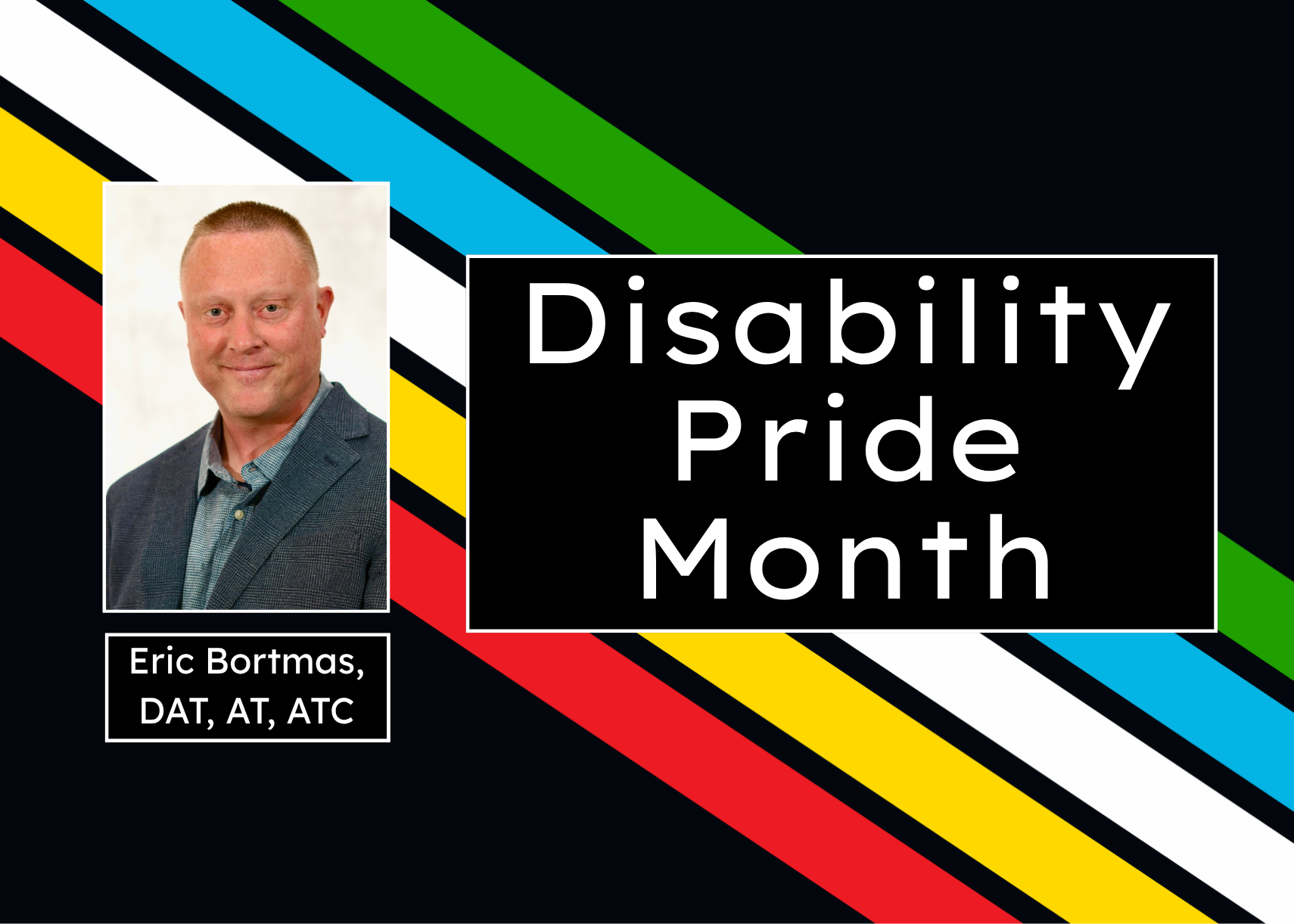
After the Americans with Disabilities Act was signed into law July 26, 1990, Disability Pride Month was created to commemorate this landmark law prohibiting discrimination against people with disabilities and ensuring accessibility in public life. In honor of Disability Pride Month, which features the theme “The World Works Better With Us” this year, NATA Now is highlighting members of the NATA Accessibility Panel throughout July.
After more than 20 years of volunteering, Eric Bortmas, DAT, AT, ATC, has seen firsthand how giving back can shape both the profession and the volunteers who help move it forward.
From his first volunteer role with the Ohio Athletic Trainers’ Association Secondary Schools Committee to his current position on the NATA Accessibility Panel, each role has allowed him to connect with others and contribute to the future of athletic training.
"Engaging within the profession and on behalf of the profession is also giving back to yourself because the people you meet will feed your sense of purpose," he said.
Read on to learn more about his volunteer journey and how it has expanded his perspective, built confidence and strengthened his connection to the profession.
What inspired you to pursue athletic training, and what was the moment you knew this was the profession for you?
I have always been enamored with sports and was inspired by those in the medical field during my youth, whether I knew them personally or through TV. As I was entering the stage of my life when I needed to decide about college, and after receiving all the postcards and large envelope mailings recruiting me to college after college, I saw a list of available majors that had married the two concepts of sports and medicine and was immediately enamored. The rest, they say, is history!
What was your first volunteer position within the athletic training profession and why did you get involved?
I onboarded with the Ohio Athletic Trainers’ Association Secondary Schools Committee in 2001 after moving to the Columbus area and meeting other area athletic trainers who were involved and encouraged the same for me. I liked that my ideas weren’t completely off the wall and that there was acceptance to at least considering them and that I was surrounded by other passionate athletic trainers from around the state.
Tell us about your current volunteer position on the NATA Accessibility Panel, why you joined the panel and what you hope to accomplish in this role.
The position was recommended to me by Trevor Bates, DHSc, AT, ATC, who I have known for a couple of decades when I addressed him at an NATA convention presentation during the Q&A session of his talk about the accessibility audit. He recognized my passion for service and connected me with Jim Murdock, MEd, ATC, who was in the audience as well. My main goal for joining the Accessibility Panel is to collaborate with the other members in meeting our mission statement and addressing accessibility needs, creating resources and representing athletic trainers with disabilities.
Why is representation in leadership important and how does it impact the profession?
While I believe that impassioned leadership is important and vital to the profession, having those in the profession who can represent an empathetic point of view can be critical to validating and justifying the panel’s output. The sympathetic leader is important but having an identifiable empathetic leader or leaders allows for very specific connections to be made and voices to be heard so that no single member ever feels alone
How has volunteering helped you grow personally and professionally?
I have been able to find my own voice of confidence that I most certainly didn’t have as a younger professional! Professionally, we all get comfortable in our own sphere of our jobs with who you are connected and talk to on a Friday Night sideline, but volunteering within the profession expands those horizons to connect you to others across the state or, in the case of the Accessibility Panel, across the country and those varying perspectives have given me opportunities of growth in my personal and professional knowledge as well as an appreciation that some issues are universally experienced while others are more regional.
What’s your fondest memory of serving so far?
I have only been on the panel for six months so I can’t say that I have too many memories banked but simply connecting with the other members and having my first few contributions greenlighted are highlights.
What advice do you have for other athletic trainers who want to give back to the profession?
Do it. When you have a niche passion for something, you will realize that you have a capacity of knowledge, effort, dedication and, most importantly, time to join a committee or panel that continues to fuel that passion. Engaging within the profession and on behalf of the profession is also giving back to yourself because the people you meet will feed your sense of purpose. If you believe, like I do, that the athletic training profession has given you so much more than a career (valued relationships, incredible knowledge and the ability to be a mentor), then find time to ensure its sustainability so that others may have that benefit in the future.