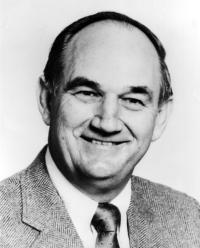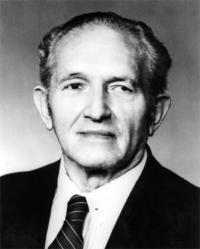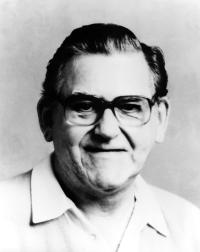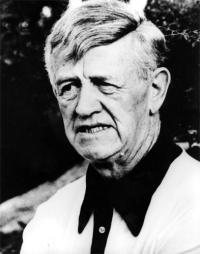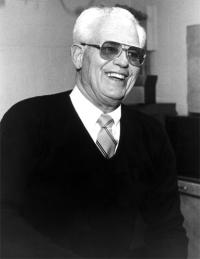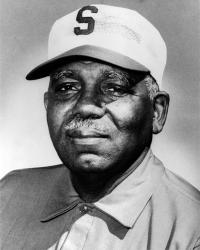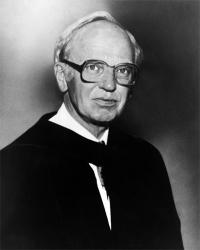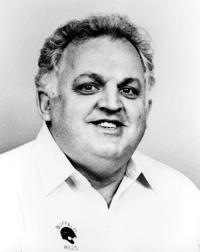
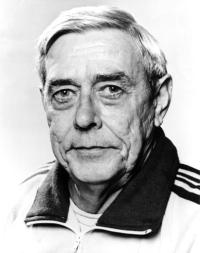
Lindsy McLean began his career as a student in 1956 at Vanderbilt. By 1963 he was head athletic trainer and director of physical therapy at the University of California. He was head athletic trainer for the San Francisco 49'ers from 1979-2003. McLean's legacy is the certification exam and requirements, which he helped establish. He is retired and living in Tennessee.
NATA Hall of Fame
1923 - 1998
For four decades, Leonard “Mack” McNeal was an integral part of the University of Richmond. He began as head athletic trainer in 1947 and eventually became chair of the Department of Health and Physical Education. He was active, serving on the NATA board and later leading efforts to organize NATA's archives.
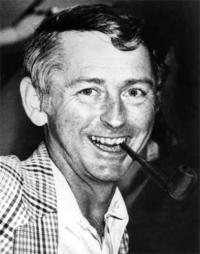
1936 - 1987
Although he was only 5'2” tall, Dick Vandervoort will be remembered as a giant in the field. At the age of 14 he attended the first NATA Annual Meeting and later became the association's first student member. He was the first athletic trainer for the Houston Rockets. Vandervoort helped restructure NATA in 1969 and led the National Basketball Athletic Trainers' Association for a decade.
1931 - 2013
Earnest “Doc” Harrington wore many hats at his alma mater, the University of Southern Mississippi, where he was head athletic trainer from 1958-94. He was a colonel in the U.S. Army Reserve and a popular speaker at many seminars. Harrington was also the first director and project coordinator for the athletic training specialization program at the University of Southern Mississippi.
1912 - 1992
Frank Wiechec was the chief physical therapist at Hazelton (Penn.)-St. Joseph Hospital and had a varied career in athletic training. He was athletic trainer at Temple University (1939-48), for the Philadelphia National League Baseball Club (1948-62), for the Philadelphia Eagles Professional Football Club (1950-58) and at the University of Pittsburgh (1962-66). Wiechec invented Ank-L-Aid, a patented ankle support, and was president of the EATA.
Joe “Snapper” Altott, who helped write the first NATA certification exam, was head athletic trainer for the Hartford Whalers Professional Hockey Club from 1972-82. He was also on the NATA Board of Directors for four years and covered several international events. Altott was the subject for “The Recruit,” a Norman Rockwell painting. After retiring, he opened a sports shop in Massachusetts.
1905-1979
Sandy Sandlin was head athletic trainer at the University of Chattanooga from 1938-75, during which time he also spent a year as athletic trainer at Georgia Tech (1944-45). An All-Star athletic trainer for the Southern Baseball League, Sandlin was known for his gentle manner and skill as a healer. The Tennessee Athletic Trainers' Society honors him by bestowing an annual Sandy Sandlin High School Athletic Trainer of the Year Award.
Carl Nelson worked at Colby College from 1959-93, serving students as an athletic trainer, associate professor and director of health services throughout his career. Nelson cared for Olympians in 1972, 1976 and 1980 winter games. He is retired and lives in Maine.
1906 - 1982
An assistant athletic trainer for more than 30 years at North Carolina State University, Chester Grant was considered a model example of professionalism, compassion and expertise. In 1974, North Carolina State presented Grant with a Distinguished Service Award and has since named its athletic training facility in Reynolds Coliseum in his memory.
1920 - 2008
A native of Brooklyn, Roy Rylander proudly served college athletes. He joined the University of Delaware in 1946 and was named head tennis coach in 1953. He retired as head athletic trainer in 1988 but continued as tennis coach until 1993. Rylander earned a Bronze Star and a Purple Heart during World War II and served as a unit training officer during the Korean Conflict. He was a member of Kappa Phi Kappa, the national professional education fraternity.