Supporting Athletic Training Leadership
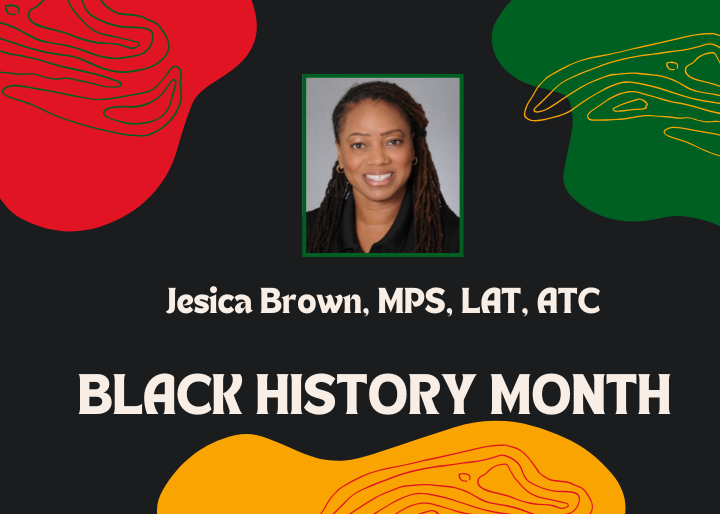
In honor of Black History Month in February, NATA Now, in collaboration with the NATA Ethnic Diversity Advisory Committee, is highlighting some of our Black leaders at the state, district and national levels, providing insight into the impact they are making on the profession.
NATA Council on Practice Advancement Health Care Administration Panel Chair Jesica Brown, MPS, LAT, ATC, became a volunteer leader aiming to facilitate the advancement of athletic training leadership.
“After establishing myself within a hospital system and creating meaningful growth and advancement opportunities for athletic trainers in my organization, I began to realize that the lessons, structures and strategies we were building shouldn’t stay local,” she said. “Volunteering became a way to extend to the broader athletic training community the work I had done locally to support practice advancement, professional standards and health care integration.”
In her current NATA volunteer leadership position, Brown continues to pursue the development of athletic trainers in various aspects of the profession, especially in health care leadership.
“In my chair role with the COPA Health Care Administration Panel, my focus is on expanding how athletic trainers see themselves within the broader health care landscape,” Brown said.
Continue reading to gain more insight into her support for the profession in the health care administration setting.
What inspired you to pursue athletic training, and what was the moment you knew this was the profession for you?
In some ways, I think I was wired for this profession long before I knew it existed. As a child, I would gather all the first aid supplies from our house and bandage up my own scrapes, and the neighborhood kids’ bumps and bruises after long summer days of playing outside. There was something instinctive about wanting to care for people and help them get back to what they loved doing.
I had my first real exposure to athletic training as a high school cheerleader. Watching the athletic trainers work sparked my curiosity, but it wasn’t until I began applying to colleges that things became clear. I narrowed my choices based on academic programs, and kinesiology and athletic training stood out immediately. They combined science, movement, problem-solving and patient care in a way that felt like a natural extension of who I already was.
The moment I knew this was the profession for me came when I realized athletic training allowed me to merge clinical skills with relationship-building. It wasn’t just about treating injuries, it was also about being a trusted presence, advocate and steady leader in moments that matter.
What was your first volunteer position within the athletic training profession and why did you get involved?
My first volunteer roles were serving as an at-large member of the NATA Council on Professional Ethics, and as a member of NATA Council on Practice Advancement Health Care Administration Panel.
I came to volunteering a little later in my career than some. Early on, I felt it was important to first find my own footing within the profession. I wanted clarity in my career path and confidence in the impact I was making before stepping into a broader leadership space. After establishing myself within a hospital system and creating meaningful growth and advancement opportunities for athletic trainers in my organization, I began to realize that the lessons, structures and strategies we were building shouldn’t stay local.
There was also a personal shift. For a long time, I didn’t feel like I had enough to offer. But as I grew in my administrative role and saw the tangible progress our ATs were making, I gained the confidence to recognize that sharing those experiences could help others navigating similar paths.
Volunteering became a way to extend to the broader athletic training community the work I had done locally to support practice advancement, professional standards and health care integration.
Tell us about your current volunteer position and what you hope to accomplish in this role.
In my chair role with the COPA Health Care Administration Panel, my focus is on expanding how athletic trainers see themselves within the broader health care landscape. I want ATs to recognize that leadership, operations and executive roles aren’t “outside” our profession, but a natural extension of our training when supported by the right competencies and development.
We are working to strengthen pathways that prepare athletic trainers for administrative and strategic positions by emphasizing leadership readiness, health care operations and business literacy. At the same time, I believe it’s critical that other health care professions understand that athletic trainers are equally prepared to serve in advanced leadership roles within health systems.
I also hope our work reaches athletic trainers who may feel uncertain or limited by traditional career models. There are diverse and meaningful pathways within this profession, and part of my mission is to help illuminate those options, particularly for students and early career clinicians seeking direction.
Ultimately, I want our efforts to produce impactful resources, foster mentorship and continue carving a visible, credible path for athletic trainers in advanced health care leadership roles.
As a member of COPE, while my role there is more focused, the work is deeply meaningful. I’m committed to ensuring that athletic trainers are afforded fair and thoughtful due process, and that when violations occur, responses are constructive rather than purely punitive. I believe in shaping sanctions that emphasize ethics education, reform and professional growth to allow individuals the opportunity to learn, restore trust and continue contributing to the profession. Though it may seem like quiet work, its impact on maintaining integrity and accountability within athletic training is significant.
Why is representation in leadership important and how does it impact the profession?
Representation in leadership defines what people believe is possible. When leadership doesn’t reflect the diversity of those entering the profession, it can unintentionally limit how individuals see their own potential. This was true for me early in my career and for many others. For me, representation means ensuring that women of color can see themselves not only providing care, but shaping policy, influencing systems and leading at the highest levels.
Setting representation is equally critical. Athletic trainers now practice far beyond the traditional athletics model. Health systems, physician practices and other medical environments require different competencies, strategic positioning and advocacy. If those perspectives aren’t present in leadership conversations, the profession risks underrepresenting a rapidly growing segment of its workforce.
Diverse leadership strengthens the profession and contributes to broadening decision-making, deepening cultural competence and enhancing credibility within multidisciplinary health care teams.
How has volunteering helped you grow personally and professionally?
Volunteering has expanded both how I see the profession and how I see myself within it. Professionally, serving at the national level has sharpened my strategic thinking. It has required me to look beyond my own organization and consider how policies, resources and professional standards impact athletic trainers across diverse settings and career stages. I have developed a deeper appreciation for the complexity of governance, ethics and practice advancement at scale.
Personally, volunteering has built confidence in me. There was a time in my career when I questioned whether I had enough to offer. Participating in national committees affirmed that my experiences bring valuable insight to the profession. It has also reinforced the importance of using my voice, especially in spaces where representation matters.
Most importantly, volunteering has deepened my sense of responsibility. When you are entrusted with shaping the direction of the profession, even in small ways, it shifts your mindset from individual success to collective advancement. That perspective continues to influence how I lead both within and beyond my organization.
What’s your fondest memory of serving so far?
One of my fondest memories was during 76th NATA Clinical Symposia & AT Expo, on the final day when the Student Career Roundtable was held. Athletic trainers were grouped by work setting and students rotated through to ask questions and explore different career paths.
It was a simple format, but incredibly powerful. Students who were curious about hospital and physician practice roles had the opportunity to engage directly with athletic trainers working in those settings. I was able to share insights about administrative pathways, leadership growth and other opportunities within health care.
What made the moment especially meaningful was that it wasn’t just mentorship flowing to students. The conversation became collaborative. Not only was I able to connect with students, but I could also share ideas and practices with established ATs in my group who were navigating similar spaces. There was a shared energy around expanding what athletic training can look like.
Seeing students and professionals light up when they realized there were broader possibilities within the profession was a tangible reminder of why this work matters. In that moment, representation, mentorship and practice advancement all intersected in a very real way.
What advice do you have for other athletic trainers who want to give back to the profession?
First and most important, don’t feel pressured to volunteer before you are ready. Giving back to the profession is meaningful work, but it should come from a place of clarity and confidence, not obligation. It took me time to find my path, develop my voice and feel that I had something substantive to contribute. There is value in building your foundation first.
Also, giving back doesn’t have to be a grand gesture. It can look like mentoring a student, serving on a small task force, contributing to a discussion or simply sharing your experiences with someone navigating a similar journey. Impact isn’t measured by visibility.
When you are ready, use your voice in a way that aligns with your strengths and your season of life. The profession benefits most when people contribute authentically, not performatively.