Honoring Values in Leadership
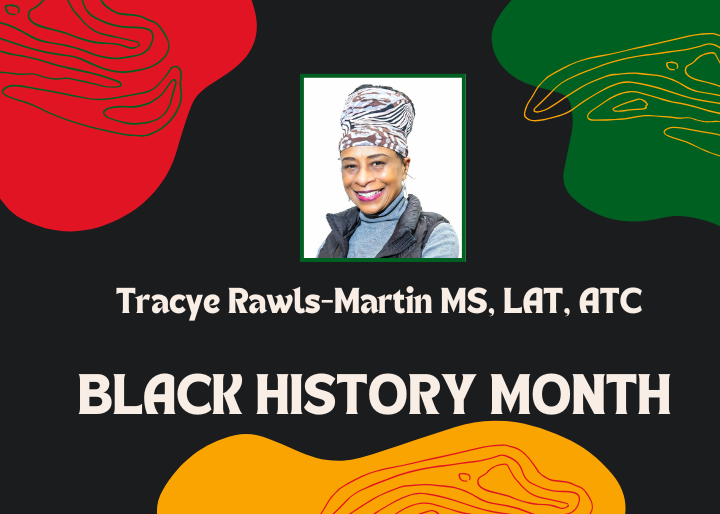
In honor of Black History Month in February, NATA Now, in collaboration with the NATA Ethnic Diversity Advisory Committee, is highlighting some of our Black leaders at the state, district and national levels, providing insight into the impact they are making on the profession.
Tracye Rawls-Martin, MS, LAT, ATC, has held many leadership roles in athletic training, which have shaped her values and solidified her strength to serve others.
“As a woman from an ethnically diverse background, an AT and a program director who practices what she teaches, I have positively influenced my community and encouraged students to strive for excellence and to make a meaningful difference,” she said.
An associate professor at Long Island University at Brooklyn and member of the New York State Athletic Trainers’ Association Diversity Equity & Inclusion Committee, Rawls-Martin said her service to the profession has evolved her character from an adaptable athletic trainer to a compassionate leader.
Read the following Q&A, which gives more detail on how leadership has influenced Rawls-Martin’s personal and professional values.
What inspired you to pursue athletic training, and what was the moment you knew this was the profession for you?
I came to New York more than 50 years ago to pursue a career in dance. Being accepted into the Alvin Ailey American Dance Center Student Certificate Program was a dream come true until my second year when a loud pop echoed through the studio. That sound came from my right Achilles tendon – a partial tear.
With no insurance, medical staff or rehabilitation resources, I was devastated. My pain was severe, I could barely walk, yet was determined to dance. I struggled through class until I could no longer participate and was ultimately asked not to return until I healed.
Refusing to give up, I took my rehabilitation into my own hands. Through prayer and persistence, I found my way to the YMCA and YWCA pools. The water gave me back my movement, strength and hope. For the first time since the injury, I could walk again.
That experience changed everything. I realized I wasn’t alone – many dancers and performers suffer injuries without proper support. That realization led me back to college and, ultimately, into athletic training. I found my calling, my purpose and a way to serve others through their most vulnerable moments.
What was your first volunteer position within the athletic training profession and why did you get involved?
The course that resonated most deeply with me was Introduction to Athletic Training, taught by one of my mentors, Vicci Hill-Lombardi, EdD, ATC. Her enthusiasm, understanding and compassion for the athletic training profession were – and still are – Infectious.
Toward the end of my undergraduate academic career, Dr. Hill-Lombardi introduced me to the team of ATs responsible for the health and well-being of more than 200 varsity athletes. Jayne Ellinger, PhD, ATC, and Danny O’Connor, ATC, graciously offered me a graduate assistant position and welcomed me as a member of the university’s sports medicine team. They also strongly encouraged my involvement in the athletic training profession at the district, state and national levels – an invitation that shaped my long-term professional engagement and leadership path.
Over my 25-plus years of practice, I have held several first-time volunteer roles, first of which was my Commission on Accreditation of Allied Health Education Programs clinical internship. Before the profession transitioned to the Commission on Accreditation of Athletic Training Education accreditation, eligibility for the Board of Certification for the Athletic Trainer certification required the completion of 1,500 clinical hours. One of my earliest volunteer roles – an internship – was under the guidance and leadership of Thomas Buckley, EdD, LAT, ATC, head athletic trainer at Hunter College, a Division III institution. Buckley was the sole AT responsible for more than 200 athletes. This experience taught me self-sufficiency, adaptability and the importance of sound clinical decision-making on a daily basis.
Tell us about your current volunteer position and what you hope to accomplish in this role.
At this stage of my career, I am a senior, and my formal volunteer hours and roles are largely behind me. However, service remains an integral part of my professional identity through mentorship, leadership and education.
Why is representation in leadership important and how does it impact the profession?
Leadership has influenced my professional growth in many ways; however, I will focus on two areas that have had the most significant impact on both my life and career:
- Role Modeling and Mentorship: Visible representation in leadership provides meaningful role models for students and early career professionals. It reinforces the idea that leadership is attainable and promotes retention, motivation and long-term professional growth within the field.
- Stronger Professional Culture: Representation in leadership fosters a culture of respect, belonging and accountability. When professionals feel valued and supported, morale improves, collaboration is strengthened and ethical practice is reinforced.
For 14 years, I have served as program director in the Long Island University at Brooklyn athletic training program. As a woman from an ethnically diverse background, an AT and a program director who practices what she teaches, I have positively influenced my community and encouraged students to strive for excellence and to make a meaningful difference. In short, representation in leadership isn’t symbolic; it directly impacts equity, effectiveness, credibility and the long-term success of the athletic training profession.
How has volunteering helped you grow personally and professionally?
Personally, working with diverse populations has broadened my understanding of different life experiences and challenges. This has strengthened my adaptability, compassion and communication skills – particularly my ability to listen, support and respond with intention.
Professionally, I’m the first African American female AT to work behind the scenes, evaluating, treating and rehabilitating three of New York City’s iconic entertainment companies.
What’s your fondest memory of serving so far?
One of my fondest memories of service is witnessing moments when my time and effort made a meaningful difference for my students – seeing confidence grow, trust develop and potential realized. Often, these moments emerged from interactions that seemed ordinary at the time. What made them especially powerful was knowing the impact extended beyond a single experience. They reinforced that showing up consistently, listening with intention and offering support can create lasting change. These moments continue to motivate my service with empathy and purpose.
What advice do you have for other athletic trainers who want to give back to the profession?
Service doesn’t require a large platform; it requires intention, consistency and purpose. My advice:
- Start With Purpose: Identify what you hope to accomplish and whom you want to serve.
- Remember Where You Started From: Reconnect with your passion and why you became an athletic trainer.
- Lead by Example: Commit to lifelong learning and self-care; daily practice shapes professional perception.
- Share Your Knowledge: Communicate what you have learned through guest lectures, workshops, in-services and presentations at all levels.
Align Service With Your Strengths: Choose avenues – teaching, research, leadership, clinical care or outreach – that are authentic and sustainable.