The Impact of Seeing Yourself
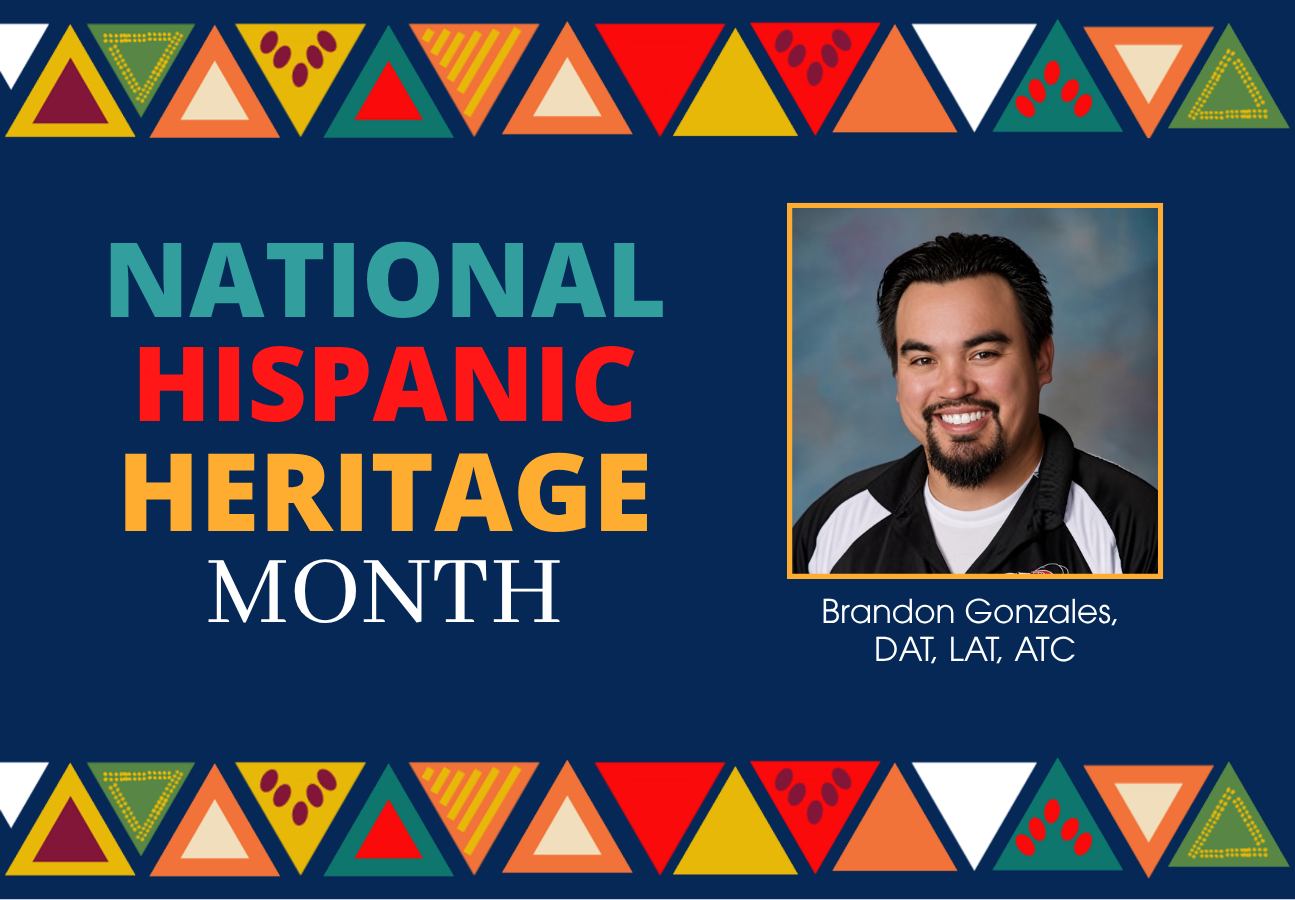
In honor of National Hispanic Heritage Month Sept. 15-Oct. 15, NATA Now, in collaboration with the NATA Ethnic Diversity Advisory Committee, is highlighting some of our state, district and national leaders and sharing insight into their drive to give back to the profession.
When Brandon Gonzales, DAT, LAT, ATC, began his volunteer leadership journey with the Illinois Athletic Trainers’ Association, he was following the path of his athletic training mentors. What he didn’t realize at the time was that he was also creating a path for those behind him.
“I had the privilege of precepting a bright young Latina student from the same town I lived in at the time,” said Gonzales, who previously served as the IATA government affairs director and Region 2 director. “One day, while working a practice, she mentioned how she was inspired to see someone who looked like her and shared her background in a leadership role in the profession. I had never thought of myself as a minority leader. I was oblivious to the idea that other minorities may see my role within IATA as a representation of their voice and experience within the profession. I always just wanted to represent athletic trainers. That moment redefined my perspective, reminding me that I represent a much larger community than just Illinois athletic trainers. Respeto.”
Now serving as IATA vice president, Gonzales is focused on continuing his advocacy efforts by increasing the public’s understanding of the athletic training profession and enhancing the state association’s educational offerings.
In this Q&A, Gonzales shares what volunteering has meant to him, what he’s learned along the way and what he hopes others take away from his experience.
What inspired you to pursue athletic training, and what was the moment you knew this was the profession for you?
I get asked this question in every interview I’ve had in athletic training, and it always gets the same answer: I have no clue! I went to Lewis University as an elementary/special education major and somehow left with an athletic training degree. Looking back, I believe it’s one of those instances where the profession chooses you. Once clinicals began, I never looked back. It was an amazing experience where every day at clinicals was a different experience. I guess I knew it was for me when I quit the track team to focus full time on my athletic training clinicals.
What was your first volunteer position within the athletic training profession, and why did you get involved?
My first volunteer experience in athletic training was as the Illinois Athletic Trainers’ Association Region 2 representative. I got involved because I was always trained that you can sit and complain or do something about it. One of my first clinical experiences was at a local high school with now IATA Hall of Famer Joe Cunnane, MSEd, LAT, ATC. He instilled in me the importance of being a leader not only to the young student athletes in his clinic, but through volunteering within the profession as well. When I ran for Region 2 representative, it was actually to fill his role when he stepped down some 12-ish years after my time with him. That was really special to me. I took a lot of pride in carrying on the strong precedent he set within the region and to uphold the values he set as an early mentor of mine. I finished my senior year interning with now-IATA and NATA Hall of Famer Tory Lindley, MA, ATC, at Northwestern while he was NATA president. I saw the time and dedication it took to lead by example. Ultimately, taking on that first role taught me that if you want to see progress in athletic training, you have to be willing to step up, do the work, and lead by example.
Tell us about your current volunteer position and what you hope to accomplish in this role.
I am currently the vice president of the Illinois Athletic Trainers’ Association. In this role, my primary goals are to continue to grow the footprint of athletic training in Illinois through public awareness and grassroots efforts. I am also prioritizing planning and executing the state meeting with our education chair.
Why is representation in leadership important and how does it impact the profession?
As I said in the opening, I never thought of myself as representing anything larger than athletic trainers prior to my interaction with that student. Since then, the weight of that realization has permeated into my daily professional life. I realized my service was about so much more than a title on a résumé or making sure my own voice was heard; I was giving voice to people I hadn't even realized were looking up to me. I wasn't just a region representative anymore; I represented a growing community of Latino and Latina athletic trainers. I carry that responsibility with genuine honor. No matter where my career leads, I stay deeply committed to lifting others who may feel underrepresented as I continue to work and clear the way for the next generation of young leaders.
How has volunteering helped you grow personally and professionally?
Professionally, volunteering has enlightened me to all the work that goes on in the background at the national, regional and local levels of athletic training. It was only through my time volunteering with IATA that I learned of the expansive resources available to us as athletic trainers through NATA, especially within the governmental affairs realm. The insight into all the work that happens behind the scenes helps me work harder to enlighten the membership to what is available to them.
I have also grown both professionally and personally from the wisdom gained from understanding that I’m a minority leader. I have had the privilege of working in many diverse institutions and clinical settings. I now have far more empathy for other underrepresented individuals. I realize that the way I see myself may not be how others see me as well. I understand that for many first-generation minority students, being the first to walk their path can be scary and a heavy weight to bear. I try to create an energy that can hold space for them so they can stop and take a breath.
What’s your fondest memory of serving so far?
My fondest memory of serving is the state meeting every year. I love this meeting. Friday night during the social and into the late hours, there is no place like it. The post-social fireside chats with other athletic trainers who are just as passionate about clinical practice and moving our practice forward in Illinois provide so much inspiration.
What advice do you have for other athletic trainers who want to give back to the profession?
Do it. I heard a saying the other day: “If you don't stand up for others when their rights are infringed on, who will stand up when they infringe on yours?”
Long before I became an athletic trainer, others fought for us to practice as we do today. I have been on the board while the Illinois Department of Financial and Professional Regulation talked about deregulating athletic training in Illinois. I have been involved in the Illinois Athletic Training Practice Act sunsetting review as well. If we didn’t have volunteers who cared about the future of this profession, who knows where we would be. Eventually, I will have to step back from volunteering; who will pick up the torch? It’s easy to sit back and say, “What have you done for me?” It’s only through the passion and dedication of our own athletic training community that we can move the profession forward to where we all want it to be.