Two Days on Capitol Hill
By Dylan Orrell, NATA Marketing & Communications Director
You spend more time in hallways than you do in meetings on Capitol Hill. Outside office doors, along narrow corridors lined with nameplates and flags, waiting for the next conversation to start, that’s where the rhythm of the day settles in. You watch groups come and go, run through talking points one more time and realize quickly that no two conversations will be the same.
At one point, we’re standing outside a Senate office, shifting slightly to make room as another group exits. Someone glances at the nameplate, someone checks the time and then the door opens and it’s our turn. Just like that, you move from waiting to representing.
That’s the part people don’t see when they think about advocacy. It’s not one big moment. It’s dozens of small ones, each an opportunity to make the profession more visible than it was five minutes earlier.
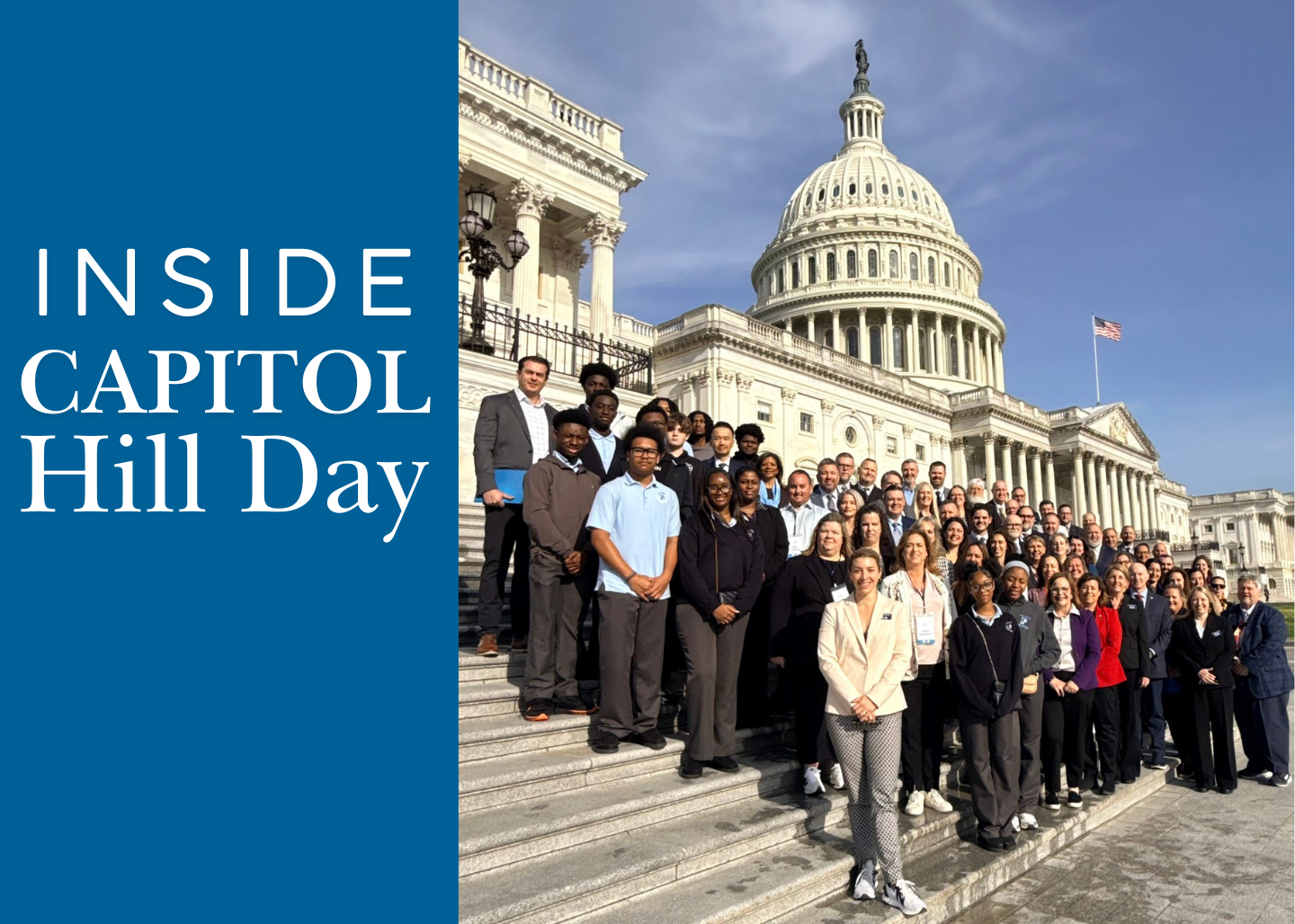
Capitol Hill Day is built around that idea. Over two days, this year March 30-31, NATA leadership, staff, members and students move from internal alignment to external action. It starts in a boardroom and ends up walking in the halls of Congress, translating what athletic trainers do into something that resonates in a completely different environment.
Inside the Room
The first day is about alignment.
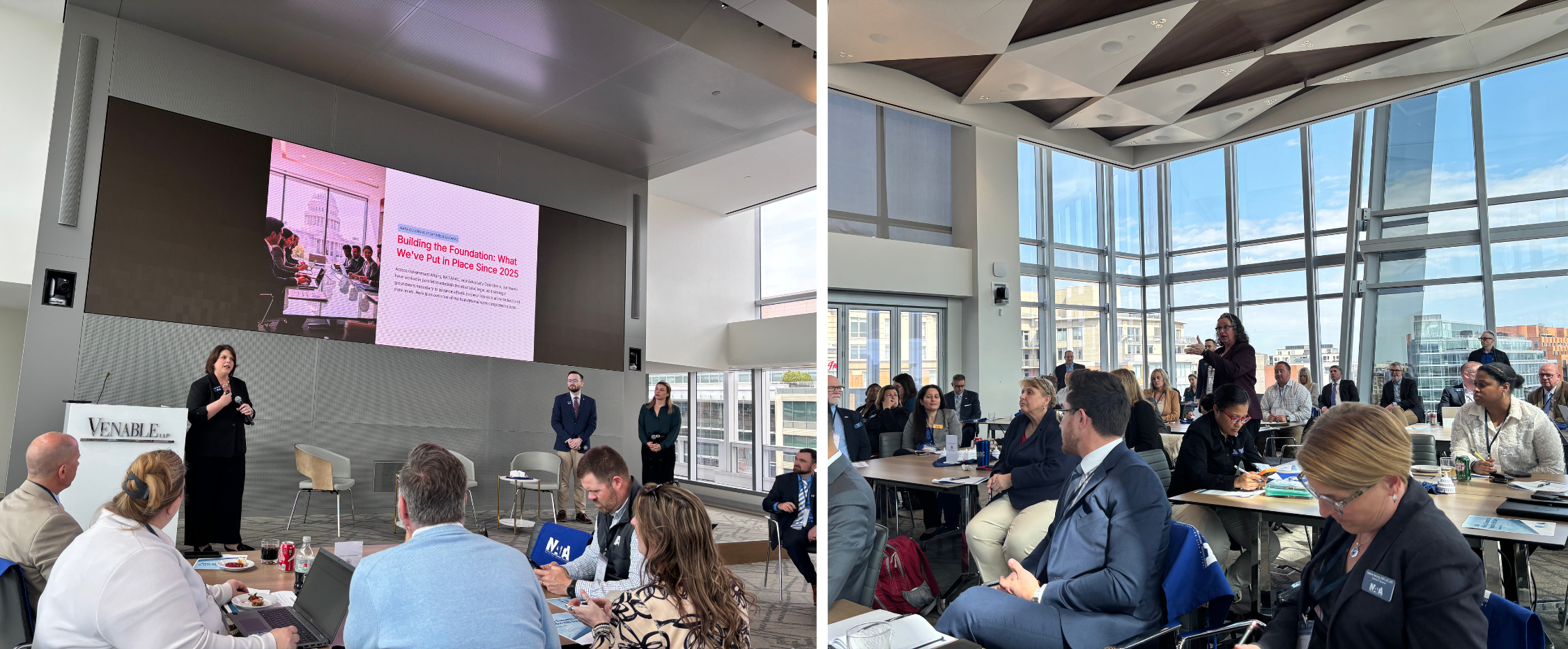
The NATA Board of Directors meeting sets the tone early. It’s focused, direct and grounded in where the profession is headed and what it needs next. Sitting in that room, you feel the shift from discussion to decision-making.
Later, the policy summit brings a broader group together. Conversations build on each other, slides anchor discussion and the room reflects the collective weight of the work. The topics are serious: legislative priorities, workforce challenges and the broader health care landscape.
It’s one thing to understand these issues internally; it’s another to articulate them in a way that resonates with policymakers balancing hundreds of competing priorities. Messaging sharpens. Examples become more specific. You begin to hear how people will tell their story, not just what the story is. By the end of the day, the strategy is set. Everyone knows what matters, the question becomes how well we can carry it forward.
The Team Behind the Advocacy
This doesn’t happen by accident, and it doesn’t only happen during Capitol Hill Day. Behind the scenes, the NATA Government Affairs Department drives this work year-round, maintaining a steady presence on Capitol Hill and ensuring the profession has a consistent voice in the policy conversations that shape athletic training. During Capitol Hill Day specifically, Director of Government Affairs Deanna Kuykendall, Government Affairs & Political Engagement Manager Madison Sequenzia and Government Affairs Associate Nick Tolfree moved seamlessly between logistics, preparation and real-time support, ensuring members were equipped for every conversation. Their command of the issues and steady presence made it clear the advocacy effort was in capable hands. We also spent time with NATA’s lobbyists, who shared insight into their approach and the realities of working in this environment. Their perspective made it clear this work is part of a larger, coordinated effort.
When sessions wrap, members reset for the next day while staff shift focus to logistics. It isn’t downtime; it’s preparation. Over dinner, a few rounds of darts and plenty of laughter, the staff steps out of formal structure and into the kind of connection that makes a team work under pressure.
Walking back from dinner at nightfall, the Capitol dome comes into view. Tomorrow, advocacy begins.
On the Ground
The second day is where the work shows up.
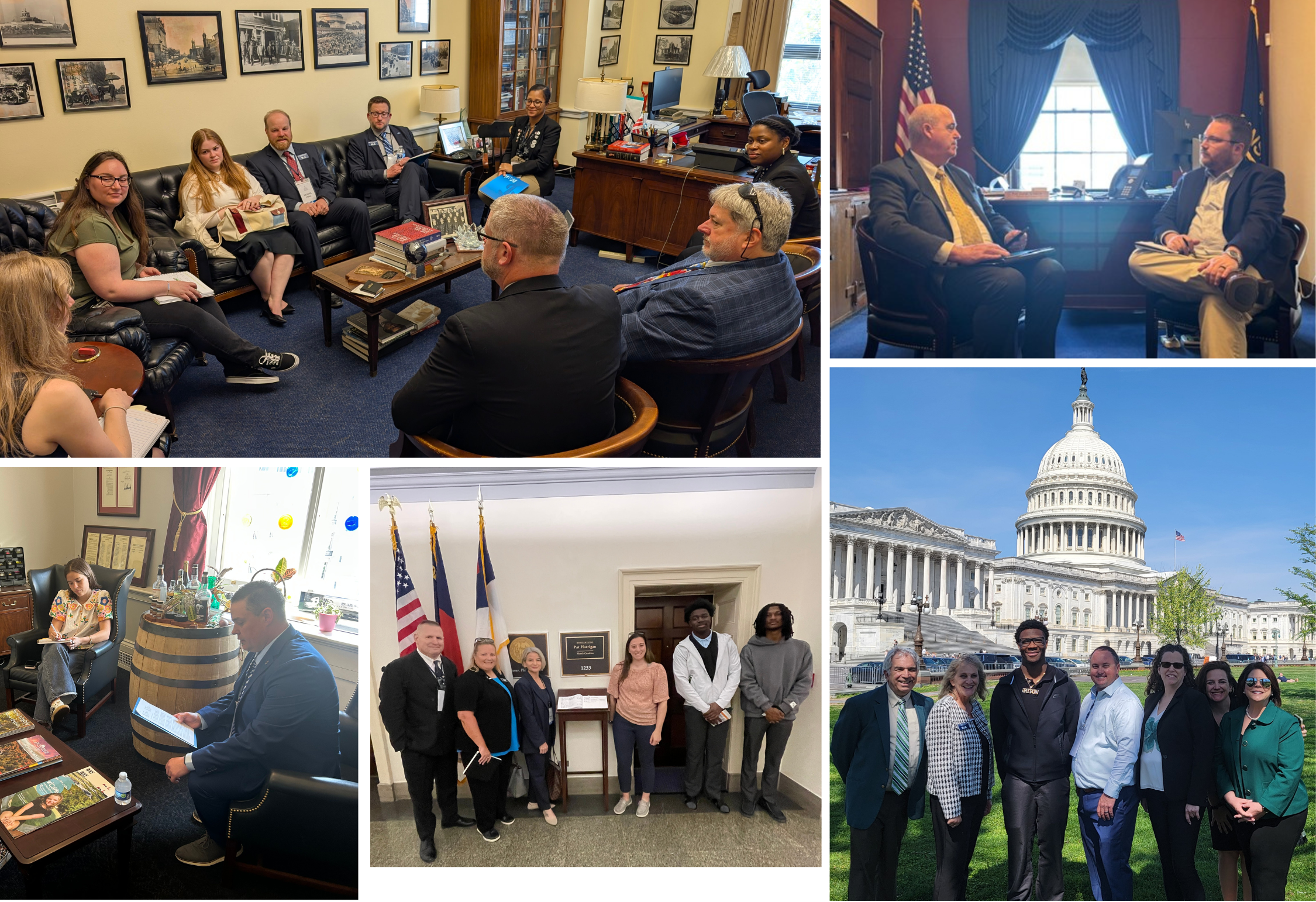
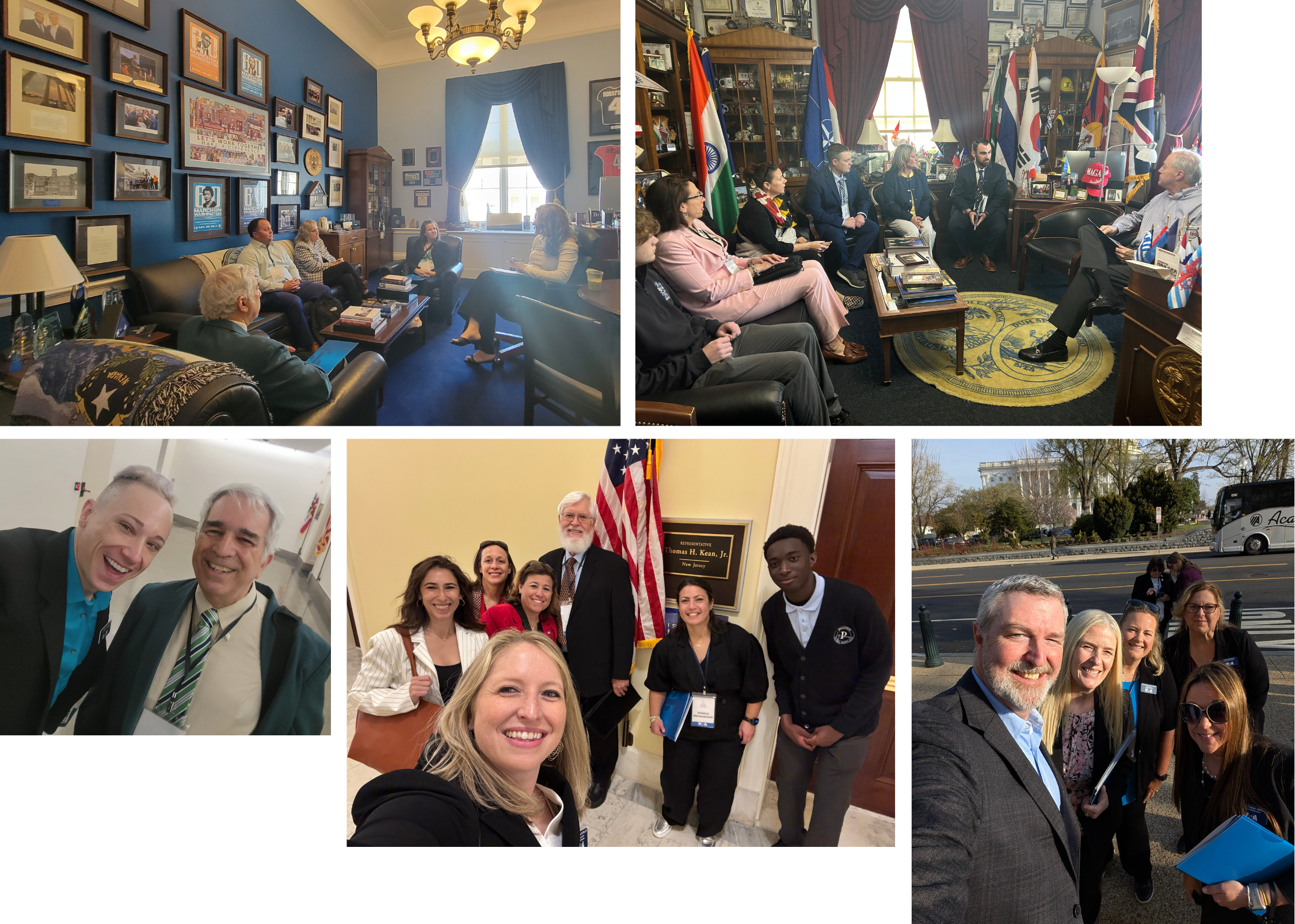
Teams move from office to office, navigating hallways, pausing outside doors and stepping into spaces that feel both formal and fast-moving. Some meetings happen around tables. Others are quick standing conversations. Each requires a reset.
NATA staff act as guides, moving groups from place to place, keeping schedules tight and ensuring members are ready the moment they step through each doorway. The job isn’t to speak for the profession. It’s to make sure the people who live it every day can carry the message forward.
In one office, a group sits while a staffer leans forward, asking follow-up questions. In another, the conversation starts from the beginning, building awareness step by step. What stands out is how consistent the message needs to be and how differently it lands depending on the room.
The strongest moments aren’t scripted. They come from members and students sharing lived experiences. In those moments, the room shifts. The issue stops being abstract. It becomes real.
Between meetings, you’re back in the hallway. Regrouping. Adjusting. Catching a quick photo outside an office or taking a breath before the next meeting.
Meeting. Hallway. Reset. Repeat.
That repetition is the work. Not one meeting, but all of them together, reinforcing the message from different angles.
What This Looks Like From a MARCOM Perspective
From a communications standpoint, Capitol Hill Day is a real-time test of everything we say we prioritize.
There’s no extra space, no long explanations, no room for ambiguity.
You have a short window to make something clear, relevant and worth remembering. What works isn’t overly polished language. It’s clarity and credibility. It’s explaining what athletic trainers do, why it matters and how it connects to the issue in front of that office.
The most effective messages are grounded in real experience. Data supports the story but doesn’t replace it. You can’t rely on volume or repetition. It has to land the first time.
Why It Matters
Advocacy can feel abstract if you’re not in the room.
But what happens during Capitol Hill Day is a direct extension of the profession. Its members, students and leaders showing up to represent what athletic trainers do and why it matters within the broader health care system.
Visibility doesn’t happen on its own, and not every meeting produces an immediate outcome, but that’s not the goal. The goal is progress, one conversation at a time.
In many ways, this work reflects the spirit of “It’s a New Day at NATA.” It’s about showing up with intention, elevating the profession through real stories and pushing the conversation forward in spaces where decisions are made. It’s not about a single moment, but about sustained momentum.
So much time is spent in hallways, but that’s where the message moves forward. Those moments shape how the profession is understood, respected and supported moving ahead.