Serving With Integrity
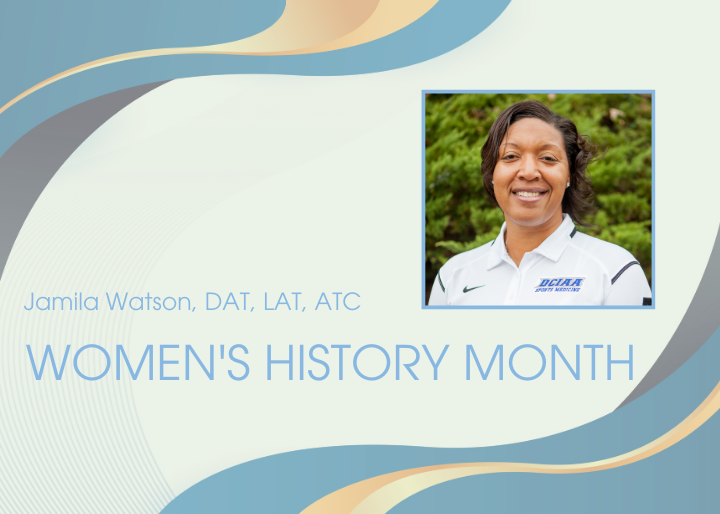
In honor of Women’s History Month this March, NATA is highlighting women leaders who are working to advance the athletic training profession at the state, district and national levels.
For District of Columbia Athletic Trainers’ Association Treasurer Jamila Watson, DAT, LAT, ATC, representation in leadership is important because diverse voices create equitable opportunities, foster belonging and ensure the profession reflects the communities it serves.
“Inclusive leadership strengthens the profession by making sure opportunities, resources and advancement pathways are equitable,” Watson said.
One of the ways she has cultivated this ethic is by representing the profession as a DCATA and NATA Ethnic Diversity Advisory Committee member on a New Orleans community restoration project in 2011.
Keep reading for more insight into her leadership values.
What was your first leadership position within the athletic training profession and what inspired you to become a leader?
My first formal leadership position within the athletic training profession was serving as lead athletic trainer for the District of Columbia Public Schools. Stepping into that role allowed me to advocate not only for the safety of student athletes, but also for the advancement and visibility of athletic trainers, highlighting their importance in secondary schools across Washington, D.C.
I was inspired to become a leader by observing and learning from exceptional mentors: Patricia Billingslea, MS, LAT, ATC, Frank Walters, PhD, LAT, ATC, Jennifer Rheeling, MS, LAT, ATC, and Darryl Conway, MA, AT, ATC. From each of them, I learned that leadership is rooted in a strong work ethic and a deep commitment to service. They modeled what it means to truly care about our profession, not just by doing the job well, but also by continuously striving to make it better through volunteering, serving on committees, mentoring others and stepping forward when leadership was needed. Their example taught me that leadership is less about titles and more about responsibility, courage and the willingness to do the hard work required to elevate the profession for those who will follow.
Tell us about your current leadership position and what you hope to accomplish in this role.
My current leadership role is treasurer of the District of Columbia Athletic Trainers’ Association. As treasurer, I am committed to strengthening the foundation of our association by prioritizing financial stability, transparency and long-term sustainability. A key focus of my work is ensuring that our finances remain transparent, accountable and strategically managed and shared. Institutional knowledge shouldn’t live in one person; it should be preserved in a way that guarantees continuity and growth. Accordingly, I’m intentional about sound financial stewardship, which is essential to maintaining trust and positioning the association to thrive for years to come.
Why is representation in leadership important and how does it impact the profession?
Representation in leadership is essential because it ensures decision-making reflects the diversity of our membership and the communities we serve. Inclusive leadership strengthens the profession by making sure opportunities, resources and advancement pathways are equitable. It also signals to athletic training students and young professionals that there is space for them to grow, lead and influence the future of the profession. This, in turn, fosters a sense of belonging, and belonging fuels retention, engagement and innovation. Further, inclusive leadership in athletic training promotes equity, broadens perspectives and creates a stronger, more unified profession where everyone can see themselves represented and valued.
Who are the women in the profession who have inspired or mentored you in your leadership journey?
I have been blessed to be inspired and mentored by phenomenal women who exemplify excellence in athletic training and leadership. These trailblazers include:
- Veronica Ampey, MS, LAT, ATC
- Patricia Billingslea-Co, MS, LAT, ATC
- Christina Carrillo, MS, LAT, ATC
- Kala Flagg, DPT, ATC, CSCS
- Marsha Grant-Ford, PhD, ATC
- Carrie Graham, AT Ret.
- Kysha Harriell, PhD, LAT, ATC
- LouAnne Jefferson, MEd, AT, ATC
- Candace Lacayo, PhD, LAT, ATC
- Jamie Mansell, PhD, LAT, ATC
- Tracye Rawls-Martin, MS, ATC, ACE
- Anne Russ, PhD, LAT, ATC
- René Revis Shingles, PhD, AT, ATC
- Karlita Warren, PhD, LAT, ATC
- Beverly Westerman, EdD, ATC
- Jennifer Rheeling, MS, LAT, ATC
I’m equally grateful for my female AT colleagues, who are my constant supporters and cheerleaders. They are:
- Rachelle Saunders, MS, LAT, ATC
- Dawn Bracley, MS, LAT, ATC
- Kimberly Summy, MS, LAT, ATC
- Sara Pittelkau, MA, LAT, ATC
Together, these women have poured into me through mentorship, encouragement and by example; shaping my leadership journey and reminding me what greatness in our profession truly exemplifies.
How has leadership helped you grow personally and professionally?
Leadership has helped me grow both personally and professionally by stretching me beyond my comfort zone, strengthening my confidence and resilience and refining my decision-making skills. Professionally, it has sharpened my strategic thinking, communication and ability to advocate for the athletic training profession. Personally, it has deepened my sense of purpose, accountability and commitment to serving others with integrity and excellence.
What’s your fondest memory of serving so far?
One of my fondest memories of service was representing DCATA as a member of the NATA Ethnic Diversity Advisory Committee and participating in a 2011 community service project with Habitat for Humanity in New Orleans. We helped rebuild homes that had been destroyed by Hurricane Katrina. Serving alongside fellow athletic trainers made the experience even more meaningful. It was incredibly rewarding to play a small role in the restoration process for families who had lost everything. That experience reminded me that our commitment to service extends far beyond the sidelines and into the hearts of the communities we serve, where compassion, teamwork and action can truly make a lasting impact.
What advice do you have for other athletic trainers who want to give back to the profession?
Just do it. Don’t wait until you feel completely ready. Step out of your comfort zone and take a seat at the table. You have earned the right to be there, so trust that. Your voice, perspective and experiences matter, and the profession grows stronger when you choose to show up and serve.