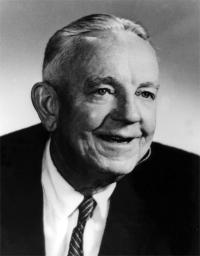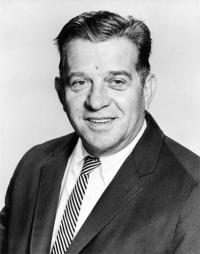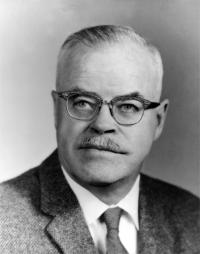
NATA Hall of Fame

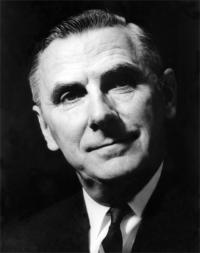
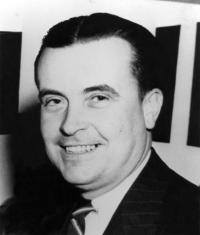
William Ferrell - 1967

1909-1967

From his first job at William & Mary in 1932, William Ferrell went on to serve under four football coaches - Otis Douglas, Bowden Wyatt, Jack Mitchell and Frank Broyles - at the University of Arkansas. A speaker and author of athletic training practices and techniques, Ferrell was a Major League Baseball player prior to becoming an athletic trainer.

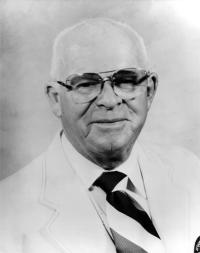
Alfred J. Wyre - 1966

1906-1968

Alfred “Duke” Wyre, head athletic trainer at the University of Maryland from 1947-67, was a founding member of NATA and was president of the Southern Conference Trainers Association in 1948. Wyre invented the “Duke Wyre Shoulder Vest” protective pad for football players, and he was among the earliest to use the precursor equipment to laser therapy. 
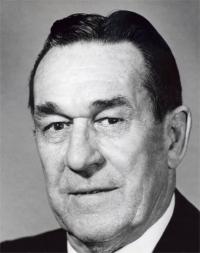
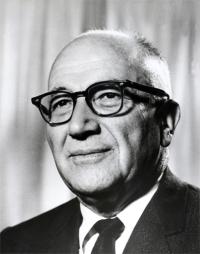
Allan Sawdy - 1966

1901 - 1967

Allan Sawdy worked with high school, college and professional teams during his 38-year career, mostly at Bowling Green State University. In addition to his athletic training duties, Sawdy taught courses in first aid and prevention of athletic injuries.

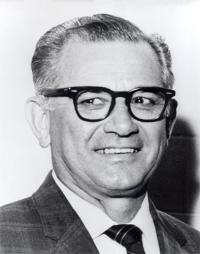
Charles Harper - 1966

1898-1970

Charles “Smokey” Harper graduated from Mercer College in 1923 - still carrying the nickname he earned in high school when he set his baseball uniform on fire by hiding a lit cigar in the back pocket. Beginning his career in 1926 at Clemson, Harper worked at Vanderbilt, Florida and UCLA before teaming with Paul “Bear” Bryant and eventually retiring in 1964 from Texas A&M.

Elias Jay Colville - 1966

1903-1983

Jay Colville tended to what he called “the acres of athletes” at Miami University, starting as an undergraduate student in 1922 and not stopping until his retirement in 1969. Colville, a founding member of NATA, served a term as board chair and was an athletic trainer for the 1956 U.S. Olympic Team in Australia.

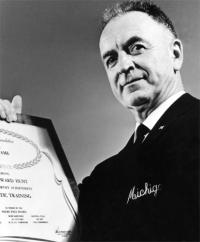
James Hunt - 1966

1903-1999

The longtime University of Michigan head athletic trainer, Hunt designed the fiberglass “Michigan Heel Cup,” which has since been duplicated by various manufacturers. He also helped develop facemasks for hockey goalies and was an early proponent of the safety device, pushing for goalies to wear facemasks as early as 1951.

James W. Littlejohn - 1966

1904 - 1978

James “Doc” Littlejohn was key to the success of the athletic training program at St. Lawrence University. Littlejohn, who joined St. Lawrence in 1926, was named to the prestigious list of Who's Who in American Education in 1964. The athletic training room at St. Lawrence is named in Littlejohn's honor.

Steve Witkowski - 1966

1907 - 1973

Steve Witkowski was a youngster helping build tennis courts at Wesleyan University when he met his mentor, Dr. Edgar Fauver. Over the next several years, Witkowski learned from the university physician and became Wesleyan's athletic trainer, a post he held for 30+ years. He was an athletic trainer for the 1956 and 1960 Olympics and the 1955 Pan-Am Games.

A. C. Gwynne - 1965

1910 - 1982

A. C. “Whitey” Gwynne devoted his entire career to the advancement of athletic training. A graduate of West Virginia University, Gwynne was an athletic trainer for the Mountaineers for 30+ years. He also worked with two Olympic basketball teams, including the 1972 team that lost to the Soviet Union in one of the most controversial Olympic moments.

Arthur D. Dickinson - 1965

1895 - 1966

Mention track and field at the University of Northern Iowa, and Art Dickinson's name will eventually come up. During his 18 seasons as head track coach and athletic trainer at what was then State College of Iowa, Dickinson's teams won 18 conference titles. He also was considered an exceptional teacher of anatomy, kinesiology and physiology of exercise.